
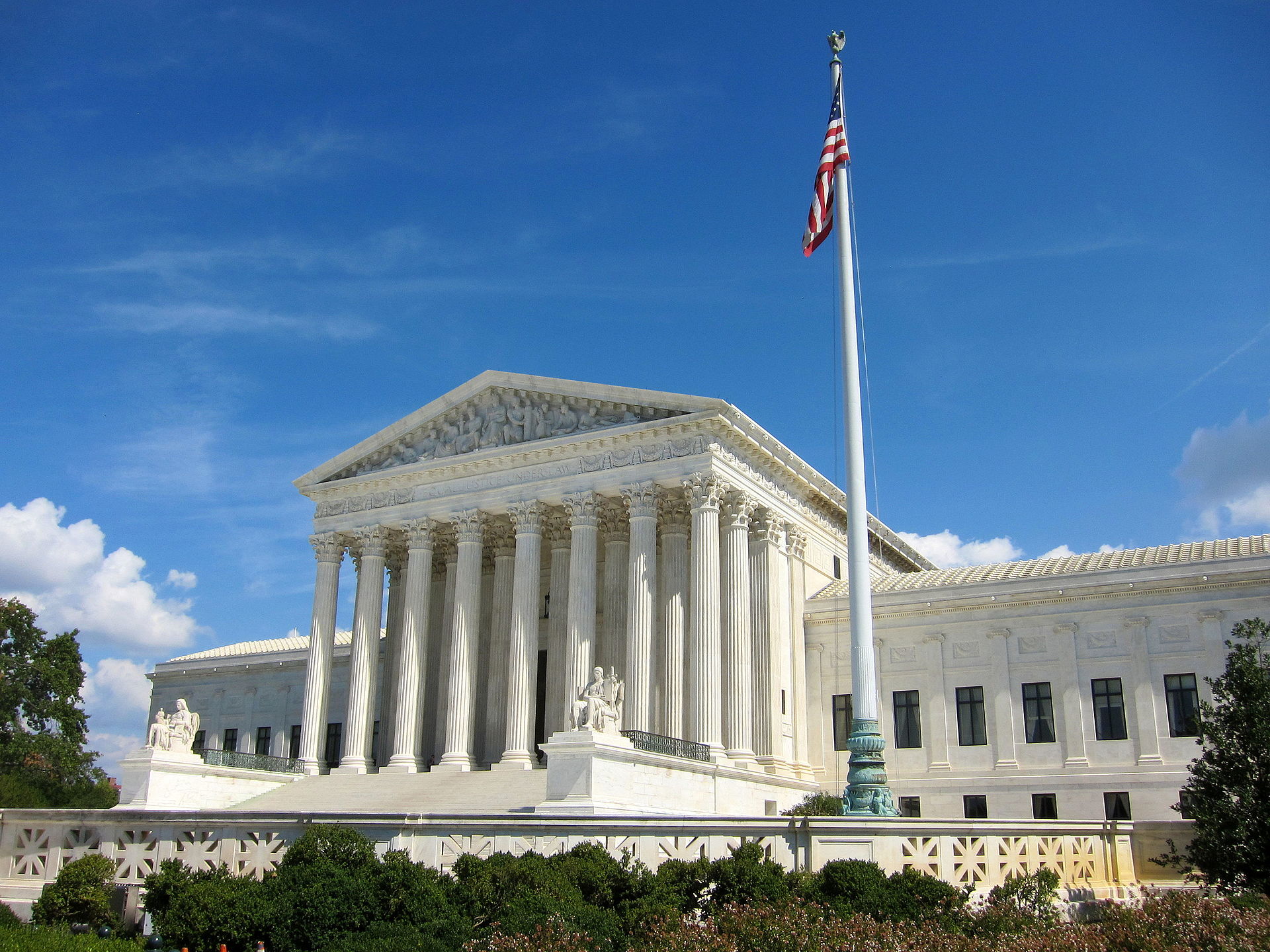
Justices soon could hint at outcome in Texas abortion case
"The Supreme Court on Wednesday heard oral arguments over Texas" contentious 2013 law that more heavily regulates the state's abortion industry.
"Women will be able to access abortion", said Texas Solicitor General Scott Keller, who argued the State's case. The Court's four liberal justices left little doubt that they would vote to strike down the Texas law imposing tight regulations on abortion clinics and doctors.
The Texas law, known as HB2, requires that all abortion providers in the state obtain admitting privileges at a local hospital, and that clinics meet ambulatory surgical center (ASC) building standards. Abortion clinics must have a transfer agreement with a nearby hospital, but OH law also says public hospitals can not have transfer agreements with abortion clinics, and Catholic hospitals refuse to grant them. "But what is the legitimate interest in protecting their health? What evidence is there that under the prior law, the prior law was not sufficiently protective of the women's health?". As I noted in my column yesterday (and as Justices Elena Kagan, Sonia Sotomayor, Ruth Bader Ginsburg, and Stephen Breyer emphasized during oral argument), the medical justification for H.B. Clinic personnel argue that the Texas regulations already have closed half of the roughly 40 clinics that existed before the law was enacted and that only about 10 clinics would remain if the law is allowed to take full effect. The only clinics in El Paso would close, which could send more women across the border into New Mexico. "And the justification for it is far weaker than anything that this Court has countenanced", Verrilli said. Alito and Roberts questioned whether some clinics closed for reasons independent of the regulations. "What is the evidence in the record that the closures were related to the legislation?" As usual, Associate Justice Clarence Thomas did not ask any questions. With four liberal justices clearly opposed to the restrictions, three conservatives likely to support them, and one conservative dead, the moderate Kennedy will be a very important swing vote. The case has the potential to change the fate of abortion restrictions in many states.
"He's going to have a strong, strong impulse to do whatever he can to keep the Court from exploding onto the front pages in June, with a whole bunch of ideologically riven and angry 4-4 cases", she says.
On Wednesday, he voiced skepticism that the plaintiff had presented sufficient evidence that Texas was trying to restrict abortions.
Kennedy even suggested sending the case back to the lower courts to collect more facts.
However, a such ruling leaving the Texas law intact could encourage other states with anti-abortion legislatures to pass similar laws.
Earlier this week, the Supreme Court heard testimony on a similar case in Texas. Should Hillary Clinton win the presidential election in November, Kennedy's vote won't matter, since whoever she picks to replace Scalia will side with the Court's liberal wing to overturn H.B. 2. "They all have one goal - to eliminate women's access to safe and legal abortion", said Dickey Lee Hullinghorst, D-Speaker of the House. "We are here to stand up for the unborn, and we are here to stand up for the rule of law", Ryan said.
With Scalia's death, however, the supporters' battle became an even more uphill one because the best case scenario for abortion opponents was a 4-4 split of the court.
More news: Carrick left in the dark over United future
